Virology section provides identification of viral pathogens in animal samples throughout the whole lifecycle of infection. Our staff are federally accredited to perform a variety of assays and participate in proficiency testing throughout the year to ensure quality results.
The virology staff serves clients in a multitude of ways, including diagnostics, research, animal health, and sale of animals. Federal reportable disease results will be revied by several federal and state agencies for continued nation-wide monitoring.
Equine Infectious Anemia (EIA) Information.
These assays are used in the detection of viral antigen or viral antibodies in serum specimens. The assays contain high sensitivity due to the amplifying effect of a few enzyme molecules being able to catalyze large numbers of substrate molecules. An ELISA system has the advantage of being a rapid test to perform; however, it may require specialized equipment (such as a spectrophotometer) for the determination of results.
The IFA assay is based on the use of virus-infected cell cultures to detect anti-virus antibodies in serum samples to the specific virus being used. The serum sample is either tested at a screening dilution or at several dilutions (antibody titer). The assay is often used to confirm ELISA-Ab results or when the types of antibodies produced to the virus are non-neutralizing (such as for feline infectious peritonitis virus).
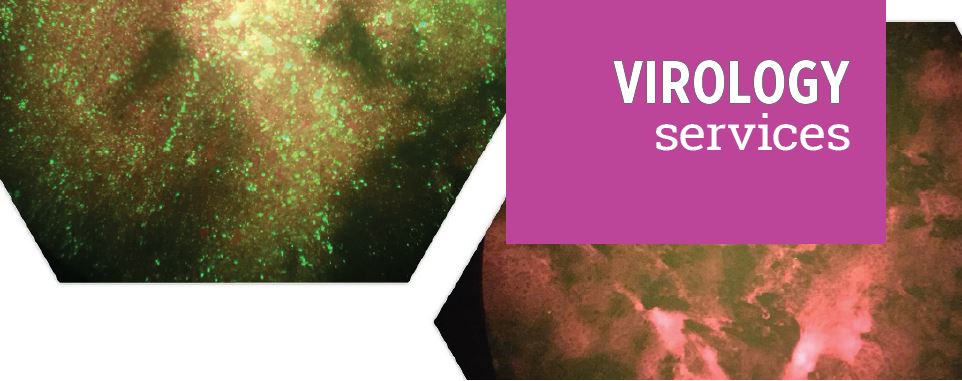
The DFA test detects viral antigen in fresh tissue impressions and smears due to active infections by using fluorescent-conjugated anti-viral antibodies as the detection reagent. Each reagent is produced for a specific virus, detecting only the virus requested. DFA testing at the VDL is only offered for detecting rabies virus in brain tissues per the CDC standard.
This active infection detection technique is used to visualize viral particles in a wide variety of specimens and species. The size and morphology of the virus particles help identify virus family and, if possible, genus and species.
Although NSEM can detect any type of virus in a specimen, its sensitivity is affected by the clarity of preparation and the amount of viral material in the sample. Virus must be present in large numbers to be observed, so negative staining EM may not be ideal on specimens with low virus titers.
This serological assay is used to determine antibody presence via the diffusion of antibodies and antigens in agar. Where the diffusing virus-specific antibodies and viral antigens overlap and form complexes, a visible precipitin line is formed. Most AGID testing has been replaced by the much more rapid ELISA testing options. AGID testing at the VDL is only offered for Equine Infectious Anemia upon specific request and is most commonly used for overseas exportation.
For the Virology flyer, click here:
| Click here for CONTACT US information |

